Digital payments in the Asia Pacific stand at a crossroads: the choice between chasing the next breakthrough or building systems that truly serve people. At the center of this debate is how QR and NFC technologies can be harnessed together to widen access and strengthen defenses against rising threats.
This purpose framed discussions at the Asia Pacific Smart Card Association (APSCA) Next Generation Payments 2026 conference, a two‑day summit where GCash along with regulators, industry leaders, and innovators, including the Bangko Sentral ng Pilipinas (BSP), the United Nations Development Programme (UNDP), Securities and Exchange Commission (SEC), Visa, HSBC Holdings, EMVCo, Crunchfish, Netwrix, Paynet, Infineon Technologies, Entrust, and Fourdotzero, examined how identity and payment systems can evolve while remaining accessible, secure, and relevant to diverse markets.
Building for sustainable merchant inclusion
Paul Albano, General Manager and Head of GCash for Business, grounded the conversation in the realities of the Philippines’ 9.3 million nano, micro, small, and medium enterprises. Of these, 8.1 million are nano merchants and 1.1 million are micro merchants—segments that represent immense potential but also immense vulnerability.
He stressed that inclusion requires more than technology. Initiatives such as the BSP's Palengke QRPh Plus Program, partnerships with the Department of Trade & Industry (DTI), and DigiCities Program with Start-up Village, Canva, and TikTok, provide a guiding hand towards the sustainable development of MSMEs.
Albano also noted how GCash Pera Outlet+ (GPO+) is transforming sari‑sari stores into community hubs, where digital transactions like cash‑in, cash‑out, bills payment, and load purchases are now outselling traditional goods.
Market timing over technology readiness
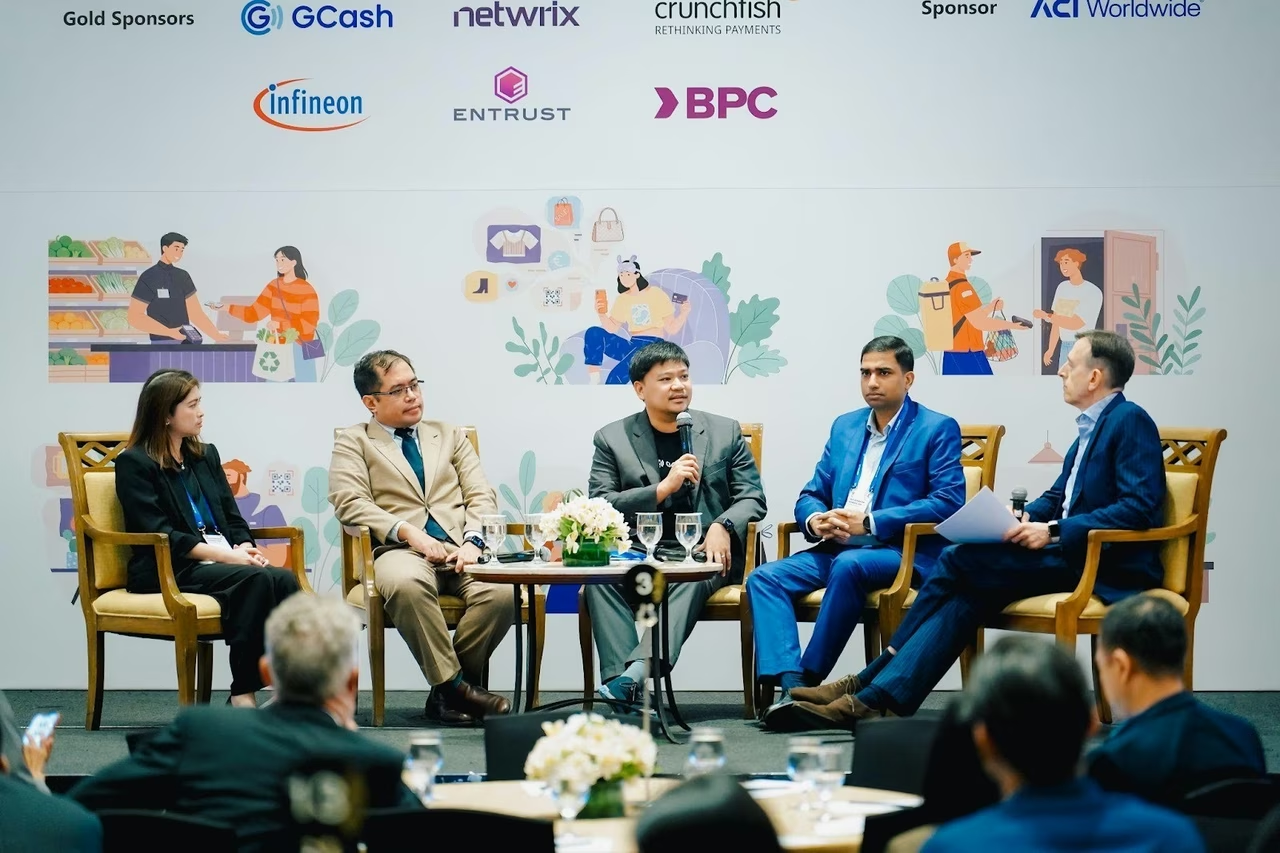
From inclusion, the discussion moved to timing. Ferdie Perez, GCash Head of Product Innovation, explained why GCash has taken a measured approach to NFC adoption. QR payments, introduced a decade ago with Alipay, now account for 60 percent of digital transactions in the Philippines.
Yet NFC, which requires infrastructure, merchant training, and cost adjustments, now has more than 300,000 tap‑to‑pay terminals, with 80 to 90% of the country’s 80 million smartphone users carrying NFC‑capable devices.
Even with this readiness, adoption has been gradual. Perez emphasized that QR and NFC are not competing technologies but complementary tools, each serving different segments and needs, and that success depends on aligning rollouts with market realities.
Adapting defenses to evolving threats
Security rounded out the dialogue. GCash Chief Information Security Officer, Miguel Geronilla, traced how fraud has evolved alongside the growth of digital payments, from account takeovers to increasingly sophisticated social engineering.
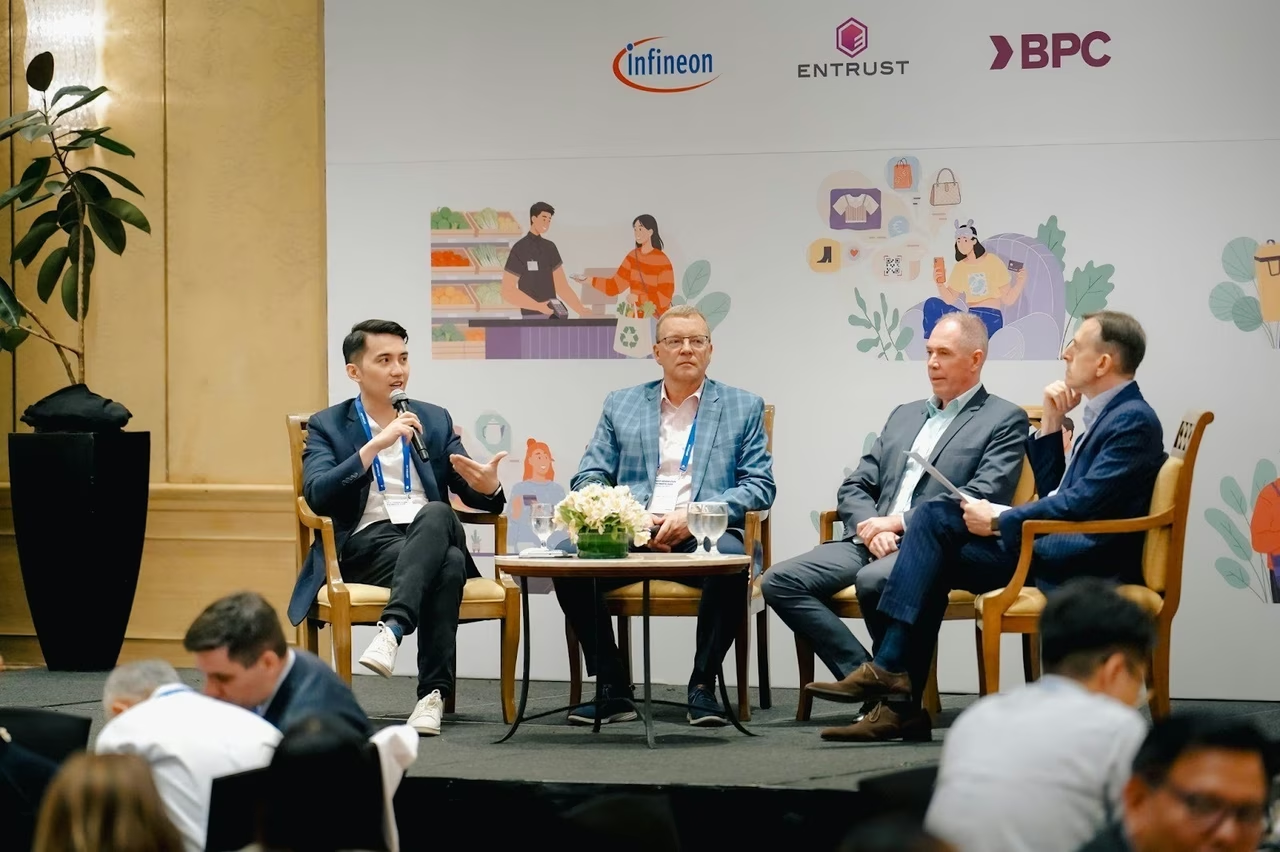
Geronilla shares insights on strengthening fraud defenses through behavioral analysis, real-time monitoring, and cross-industry collaboration at APSCA Next Generation Payments 2026.
He recalled how GCash implemented biometric face verification before it became an industry standard. He described current defenses that combine behavioral analysis, transaction monitoring, and real‑time friction when unusual patterns arise. He underscored that no single company can solve these challenges alone, and voiced support for the Anti‑Financial Account Scamming Act (AFASA), which strengthens financial institutions' ability to trace and recover funds across the ecosystem.
The conversations at APSCA further underscored that the region's payment evolution will be shaped less by any single technological breakthrough and more by how effectively the industry addresses practical gaps between capability and readiness, from merchant education and acceptance infrastructure to security frameworks that keep pace with increasingly sophisticated threats.
As the leading industry association for identity and payments in the Asian region, APSCA has a 25-year track record of connecting key decision-makers to explore critical business and technology issues for identity and payment systems.
By anchoring technology decisions in market realities rather than aspirations, GCash continues to build payment solutions that serve the diverse needs of the millions of GCash users, ensuring that innovation advances financial inclusion rather than leaving segments behind.
For more information, please visit www.gcash.com.
About Mynt
Mynt is the first and only $5 billion unicorn in the Philippines. It's a leader in mobile financial services focused on accelerating financial inclusion through mobile money, financial services, and technology. Mynt operates two fintech companies: GXI, the mobile wallet operator of GCash — the #1 Finance App in the Philippines, and Fuse Lending, a tech-based lending company that gives Filipinos access to microloans and business loans.
About GCash
GCash is the Philippines’ #1 Finance App and Largest Cashless Ecosystem. Through the GCash App, users can easily purchase prepaid airtime; pay bills via partner billers nationwide; send and receive money anywhere in the Philippines, even to other bank accounts; purchase from over 6 million partner merchants and social sellers; and get access to savings, credit, loans, insurance and invest money, and so much more, all at the convenience of their smartphones. GCash’s mobile wallet operations are handled by G-Xchange, Inc. (GXI), a wholly-owned subsidiary of Mynt, the first and only duacorn in the Philippines.
Mynt and GCash are staunch supporters of the United Nations Sustainable Development Goals (SDGs), particularly UN SDGs 5,8,10, and 13, which focus on safety & security, financial inclusion, diversity, equity, and inclusion as well as taking urgent action to combat climate change and its impacts, respectively.
For more information, please contact:
Bruce Rodriguez, Head of Business Communications
Corporate Communications
Legal Disclaimer & Safe Harbor Statement
This press release is for informational purposes only and does not constitute, or form part of, any offer, solicitation, or invitation to sell, issue, purchase, or subscribe for any securities in the Philippines, the United States, or any other jurisdiction. No securities of Mynt, Inc. have been or will be registered under the U.S. Securities Act of 1933, as amended, and such securities may not be offered or sold in the United States absent registration or an applicable exemption from registration requirements. There will be no public offering of the securities of the Company in the United States. No money, securities or other consideration is being solicited by this document or the information contained herein and, if sent in response to this document or the information contained herein, will not be accepted. Any potential initial public offering and listing in the Philippines, if pursued, remain fully subject to prevailing market conditions and regulatory approvals, including the registration requirements of the Philippine Securities and Exchange Commission and the listing rules of the Philippine Stock Exchange, Inc., and there can be no assurance that any such filings will be made or that any offering or listing will be consummated. This document contains forward-looking statements that involve inherent risks and uncertainties; actual results, timelines, and outcomes may differ materially from those projected due to shifting market dynamics, economic environments, and regulatory updates.